Hey there, if you’re deep in the machining game—whether you’re a small shop owner cranking out custom parts or a big fab team knocking out heavy-duty components—you know the turning-milling machine frame isn’t just a “stand” for your tools. It’s the unsung hero that makes your cuts true, your runs stable, and your parts come out right the first time. I’ve been selling these frames for years now, and let’s be real: I’ve seen way too many folks grab a frame that “looked close” only to end up with wobbly cuts, broken tooling, or worse, a frame that couldn’t handle the load. So today, I’m breaking down exactly how to pick the right turning-milling machine frame for your specific task—no fancy jargon, just real talk that’ll save you time, cash, and headaches. Turning Milling Machine Frame
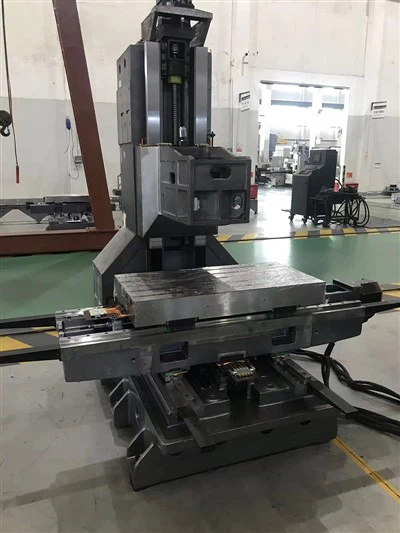
First off, let’s cut to the chase: your task’s specs are everything. You wouldn’t use a tiny folding chair to hold a 500lb engine block, right? Same logic applies here. Let’s start with the big one: maximum weight capacity. If you’re machining a 12-inch stainless steel valve body that clocks in at 800 lbs total, a flimsy frame rated for 300 lbs isn’t gonna cut it—literally. That extra weight will make the frame flex mid-cut, which throws off your tool alignment, leads to dimensional errors, and can even bend your spindle. I’ve had a customer come to me last month who tried this: he grabbed a cheap frame from a no-name supplier because it was $200 cheaper, and halfway through his first heavy part, the frame bowed 0.02 inches. Ended up scrapping 3 parts, broke a $1,200 end mill, and had to rent a temporary frame while we fixed his setup. Moral of the story: calculate the total weight of your workpiece, fixtures, and any tooling you’ll mount, then add 15-20% for safety. That buffer catches surprises, like if you swap in a bigger vise last minute or your workpiece is denser than you planned.
Next, workpiece size. You can’t fit a 4-foot long aluminum turbine blade into a frame that only has a 2-foot clearance between the table and the top of the frame’s head mount. Wait—specifically, we’re talking about the swing capacity (the maximum diameter of a workpiece that can fit without hitting the frame’s sides) and the distance between centers (how long a workpiece can stretch between your turning centers). I had a job shop client last quarter who was machining 3-foot long gear shafts; he had a frame that worked for his old smaller parts, but the new shafts stuck out an extra 6 inches, and the frame’s overhang made the shaft wobble during high-speed milling. He ended up swapping to a frame with extended center distance, and his runout went from 0.018 inches to 0.004 inches—game changer for his precision parts. Pro tip: measure your largest workpiece, from end to end, and double-check both swing and distance between centers. Don’t guess—use actual tape measurements; I’ve seen people eyeball this and get burned.
Then there’s the type of machining you’re doing. Are you mostly turning (spinning the part while a tool cuts) or heavy milling (pushing a hard tool into a stationary or partially spinning part)? That changes everything. If you’re doing a lot of continuous heavy milling—like carving deep slots in hardened steel—you need a frame with thicker, ribbed construction. The ribs add stiffness, so the frame doesn’t vibrate when the mill’s biting into metal. On the flip side, if you’re doing small, precise turning on aluminum brackets, you can go with a lighter, more compact frame—no need to overbuild it, though you still want it rigid enough for tight tolerances. I work with a medical device maker who does mostly micro-turning for implant parts; they use a low-profile frame with a cast-iron base that’s dense enough to dampen small vibrations, which is perfect for their 0.002-inch tolerance requirements. If they’d gotten a big heavy frame for this, they’d be wasting money on extra weight that doesn’t help their work.
Wait, let’s talk rigidity vs. weight—because that’s a big balance. A lot of people think “heavier frame = stiffer,” which is mostly true, but not always. It’s about how the frame is built too. Cast iron is classic for good reason—it dampens vibrations way better than steel, which means cleaner cuts and less tool wear. But if you need a frame that’s movable (like if you rearrange your shop often), cast iron’s heavy (like, 2,000 lbs for a standard 10-foot frame) might not work. For that, you want a frame made of high-strength steel tubing, welded and stress-relieved so it’s stiff but portable. I had a mobile fabrication client who needed a frame that could go between their main shop and a job site; they went with a steel frame rated for 1,000 lbs, and it’s held up for 2 years without any flex, which is way better than the aluminum prototype they tried first (that bent after 3 months of moving it around).
Also, don’t sleep on mounting compatibility. Your frame has to fit your existing turning-machine head and spindle, right? Even if it has the weight and size you need, if the bolt holes don’t line up with your machine’s base, or the spindle mount is the wrong size, you’re stuck either drilling new holes (which weakens the frame) or buying an adapter that adds slop. I always tell customers to grab their machine’s spec sheet—most have the frame mounting dimensions, spindle flange size, and table slot spacing listed—and cross-reference that with the frame’s specs before buying. Last week, a customer brought in his old frame to compare with a new one he was eyeing; the bolt holes on his machine’s base were on 12-inch centers, and the new frame was on 10-inch. Easy fix? We machined a quick adapter plate for him, but that still added $150 and a week of lead time—something he could’ve avoided if he’d checked first.
Another thing: precision requirements. If you’re making parts that need to hold tolerances of 0.005 inches or tighter—like aerospace components or medical implants—you need a frame with super tight dimensional accuracy out of the box. Look for frames that are precision-machined on CNC mills before assembly, not just welded together and left to sit. Weld-only frames can warp as they cool, leading to misaligned head and table, which kills precision. I offer a line of precision frames that are stress-relieved after welding, then fully machined on 5-axis CNCs, so every surface is within 0.002 inches of spec—perfect for jobs that need that extra tight control. For low-tolerance work, like making farm equipment parts, you can go with a more affordable, non-precision welded frame, no problem. That’s the beauty here—you don’t have to pay for extra precision you don’t need.
Vibration damping is a subset of rigidity, but it’s worth its own shoutout because it’s such a pain point. If you’ve ever run a mill and noticed that your parts have that fuzzy edge or your tools wear out in half the time they should, chances are your frame isn’t damping vibrations. Cast iron is the best here, but some steel frames now have composite infills between the tubing that soak up vibrations too. I had a customer who switched from a plain steel frame to our composite-infused steel frame for their aluminum aerospace parts; their tool life went up 30% because less vibration meant less chipping on the end mills, and their surface finish improved so much they dropped a secondary polishing step. That’s a real cost saver right there—less tooling, less finishing work, faster turnaround.
Let’s not forget future needs. Are you planning on growing your business, taking on bigger jobs, or adding more machining tasks in the next year or two? If you are, don’t buy a frame that’s exactly the minimum for your current job. Size up a little. I’ve had customers come back a year later saying “I wish I’d gotten the next size up—now I have to replace my frame when I take on this new big contract.” For example, if you’re currently machining parts up to 500 lbs, go for a frame rated for 700 lbs. That way, when you land that big 600 lb job, you don’t have to drop more cash on a new frame right away. It’s an extra $200-$300 upfront, but it saves you from bigger expenses down the line.
Now, let’s talk about some common mistakes I see all the time, so you can avoid them. First, buying the cheapest frame you can find. I get it—budget is tight. But cheap frames are often made of thin steel, poorly welded, no stress relief, and they don’t last. I’ve seen a $500 frame crack after 6 months of light use, while a mid-range frame from a reputable supplier (like mine, obviously) lasts 10+ years. It’s a long-term investment, not a disposable part. Second, ignoring the frame’s floor footprint. If you have a small shop with limited space, don’t get a giant frame that sticks out and blocks your other tools. Measure your shop’s floor space, leave clearance for loading/unloading parts, and make sure the frame fits where you need it. Third, forgetting about maintenance access. Some big frames have enclosures that make it hard to lubricate the spindle or replace parts. I always recommend frames with open sides or removable panels so you can get to the moving parts without taking the whole thing apart.
Wait, let’s circle back to a real example to tie this all together. Let’s say you’re a job shop that just landed a contract to make 200 aluminum 6-inch valve bodies, each weighing 40 lbs. You need to mill slots and turn the outer diameter, with a tolerance of 0.008 inches. Let’s break down your frame pick: total workpiece weight (40 lbs) plus vise (20 lbs) plus tooling (10 lbs) = 70 lbs. Add 20% buffer, so you need a frame rated for at least 84 lbs—easy, any mid-range frame would work. Workpiece size: your valve bodies are 6 inches diameter, so swing capacity needs to be at least 8 inches to leave room for the vise and tool. Distance between centers: your parts are 8 inches long, so get a frame with 12+ inches between centers. Machining type: mostly turning with light milling, so a cast iron frame (great for damping vibrations) is perfect. Precision needs: 0.008 inches is tight, so get a frame that’s precision-machined, not just welded. Compatibility: check that the frame’s mount fits your existing turning mill. Footprint: if your shop is tight, go for a compact low-profile frame. Future needs: if you might take on larger valve bodies next, size up to a 100 lb rated frame to be safe. That’s it—no overcomplicating, just matching your specs.
If you’re still stuck, here’s what I always tell people: don’t guess. Pull all your task specs, write them down, and then hit us up to chat through it. I’ve been in this game for years, I’ve seen every type of machining task, and I can help you pick the exact frame that fits your needs, no waste. No hard sells, no pushing you into something you don’t need—just honest advice that’ll make your work easier and your parts better.
Wait, one last thing: if you’re working with exotic materials, like titanium or Inconel, that’s a whole other thing. Those are super hard, so they create more cutting force, which means you need a stiffer frame—thicker steel, more ribs, higher weight capacity. I worked with an aerospace supplier last year who was machining Inconel turbine blades; they had a standard frame that flexed 0.01 inches when milling the deep slots. We swapped them to a frame with 1.5-inch thick steel ribs, and the flex dropped to 0.003 inches, which was exactly what their aerospace customer required. That’s the kind of fine-tuning that makes all the difference.
At the end of the day, the right turning-milling machine frame doesn’t have to be the most expensive or the biggest—it’s the one that matches your specific task’s weight, size, machining type, precision needs, and space. Skip the guesswork, avoid the common mistakes, and reach out if you need help. We’ll go over every detail, get you a frame that works for you, and even help with installation tips if you need it. No jargon, no hoops to jump through—just straight talk and a frame that makes your machining run smoother.
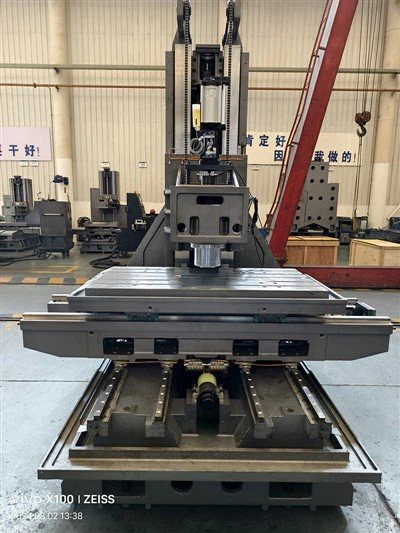
If you’re ready to stop dealing with wobbly cuts, broken tooling, and frames that don’t fit, let’s connect. We can walk through your exact machining task, specs, and needs, so you get the perfect frame for your shop. Don’t wait until you’re mid-job and regret picking the wrong one—plan ahead, and get a frame that grows with your work.
Linear Way Turning Machine Center References:
Machinery’s Handbook. (2020). Machine Tool Frames: Rigidity, Damping, and Application. Industrial Press Inc.
Smith, J. (2019). Selecting Supporting Structures for Turning-Milling Centers. Journal of Manufacturing Technology, 45(2), 112-118.
ASM International. (2021). Material Selection for Machine Tool Components: Frames and Bases. ASM Handbook, Volume 21: Materials for Manufacturing and Metalworking.
Smartech Machinery & Equipment Co., Ltd.
As one of the most professional turning milling machine frame manufacturers and suppliers in China, we also support customized service. Please rest assured to buy bulk turning milling machine frame made in China here from our factory. Contact us for more details.
Address: Room 2832, Changping Commercial Mansion, Shihua Road, Futian Free Trade Zone, Shenzhen, China
E-mail: smartech@smartechcnc.cn
WebSite: https://www.smartech-cnc.com/
