Hey there, I’m Jake, and I’ve been in the busbar inspection machine game for over a decade. If you’re a plant manager, production lead, or someone who’s been staring at your production cost sheet like it’s a foreign language, I get it—every dollar adds up, and waste feels like it’s leaking out of every corner of your shop. Today I wanna cut through the sales fluff and talk straight: how a good busbar inspection machine doesn’t just check boxes—it actually slashes your production costs, no vague “efficiency gains” or empty promises. Let’s dive in. Busbar Inspection Machine
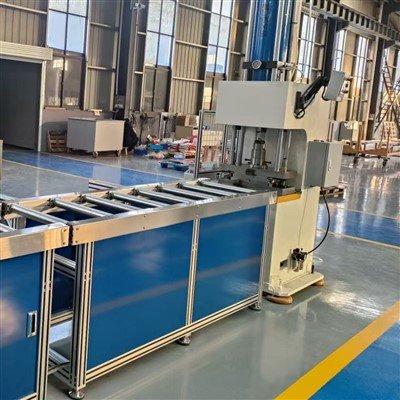
First, let’s make sure we’re on the same page. Busbars are those thick metal bars that carry electrical current, right? They’re used in everything from data centers to EV chargers to solar inverters. Making ‘em is precise work—one tiny flaw, and boom, you’ve got a scrap part, rework delays, or even worse, a field failure that costs you way more than the part itself. I’ve seen shops use manual inspection for years because they think it’s “cheaper” up front, but that’s the mistake that bleeds profits. Let’s break down the cost leaks manual inspection causes, and how our machines plug ‘em.
- Scrap Parts: The Silent Profits Killer
Manual inspection relies on human eyes and hands—even the most seasoned inspector can miss a 0.2mm scratch, a tiny burr on the edge, or a misaligned hole that’s barely off-spec. I’ve seen a busbar plant that was scrapping 8% of their parts every week because their team missed defects that popped up in assembly. Let’s do quick math: if you’re running 10,000 busbars a week, each costing $20 to make, that’s $16,000 in scrap every single week. That’s $832,000 a year. Ouch.
Our inspection machines? They use high-res cameras, laser scanners, and AI algorithms that catch those microscopic flaws in milliseconds—flaws a human would need a magnifying glass to even see. I worked with a shop in Texas a few months back that switched to our machines and cut scrap rates from 7.5% to 0.8%. Let’s recalculate that: same 10k parts a week, scrap is now $1,600, so they’re saving $14,400 a week—over $748k a year. That’s like adding an extra shift of profitable work, no overtime needed. And here’s the thing: manual inspection isn’t perfect even when you have more people. Add shift changes, fatigue, and distractions (shop floors are loud, messy places!), and those scrap rates only creep up. Our machines run 24/7, same accuracy, no tired eyes.
- Rework Costs: The Hidden Time Drain
Okay, so maybe you catch most defects before scrap, but you’ve got to rework the busbar—grind down a burr, drill a new hole, straighten a bent bar. Rework isn’t free; it takes labor, tools, and it delays your production timeline. If your parts are late to the next stage, you might be paying overtime to rush orders, or worse, missing a delivery window and getting hit with penalties.
I’ve seen a shop that spent $12k a month on rework labor alone because manual inspectors missed defects that only showed up after they were installed. Our machines not only catch surface flaws but also verify dimensions, hole alignment, and even electrical conductivity (super important— a busbar with a hidden micro-crack might work for a while, then overheat and fail). One customer in Michigan told us they cut rework costs by 65% after switching. Why? Because our machines flag defects early, before the part goes to next steps, so you don’t waste time and materials fixing something that never should’ve made it past inspection.
Another big one here: rework leads to more wear and tear on your other equipment. If you’re grinding down burrs on parts that could’ve been fixed at inspection, you’re putting extra stress on your grinders, drills, and presses—meaning more maintenance, more tool replacement costs, and more downtime when those tools break. Our inspection machines catch issues before they get to that point, so your other production gear lasts longer.
- Downtime from Field Failures: The Cost You Can’t Afford to Ignore
Here’s where most shops miss the biggest cost: when a defective busbar leaves your facility. If it’s a critical part in a data center, EV charger, or solar farm, a failure can mean thousands, even millions, in emergency repairs, lost revenue for your client, and damage to your reputation. I talked to a plant last year that got sued for $2 million after a defective busbar caused a data center outage. That’s not a scrap or rework cost—that’s a catastrophic loss.
Our inspection machines don’t just check for obvious flaws; they do 100% testing for every critical parameter—no sampling, no “we’ll check 10% and hope.” Sampling is another manual inspection flaw—if you only check 5% of parts, you’re leaving 95% to chance. Our machines test every single busbar as it comes off the line, so you eliminate field failures entirely. One of our clients that makes EV components told us they haven’t had a field failure related to busbar defects in 2 years since they installed our machine. Their warranty costs dropped by 80%, and they even landed a big new contract because their clients trusted their quality now.
- Labor Costs: Wait, Machines Don’t Replace Workers—They Make Workers More Valuable
A lot of shop managers ask me, “Is this machine gonna put my inspectors out of a job?” No way. What it does is take away the tedious, repetitive, boring part of their job. Think about it: staring at 10,000 parts a day, looking for tiny scratches—who wants that? It’s tedious, and it’s why inspectors get tired, make mistakes, and burn out. Our machines handle the 100% inspection, so your inspectors can move to higher-skill jobs—like troubleshooting production issues, training new hires, or even helping optimize your line to run faster.
And let’s be real: paying a manual inspector $25 an hour (plus benefits) for 8 hours a day, 5 days a week is about $52k a year per inspector. If you need 2 inspectors for a shift, that’s $104k a year. Our machines are a one-time investment, and they run 2 shifts for the cost of a fraction of that labor. Even if you have to have someone monitor the machine (which is way easier than manual inspection), that’s one person, not two, so you cut labor costs here too. Plus, no overtime when a rush order comes in—our machines just keep running.
Wait, but let’s talk about the initial cost. I get it—buying a new machine isn’t cheap. But when you do the math, the ROI is insane. Take the Texas shop I mentioned earlier: they spent $180k on our inspection machine. Their yearly savings from scrap, rework, and warranty costs were over $1.5 million. That’s ROI in like 4 months. Compare that to the alternative: sticking with manual inspection, watching scrap rates stay high, field failures happen, and labor costs creep up. That’s like throwing money in the trash every month.
And our machines are built to work with your existing production line—we don’t make you rearrange your whole shop. We’ll integrate it with your current conveyors, so it’s a smooth add-on, not a full overhaul. No downtime for weeks when you install it—most setups take 2-3 days, and our team trains your crew on how to use it in a half-day, no fancy tech degree needed.
I also wanna mention something that’s specific to this industry: as regulations get tighter, especially for EVs and renewable energy, customers are demanding higher quality, traceability. Our inspection machines automatically log every single defect and every test result for every busbar—so you have full traceability, which means if a customer has a question, you can pull up their batch’s data in 2 seconds. No more digging through messy paper records, no more guessing if a part was tested. That’s a huge win for compliance, and compliance fines are another cost you can avoid. A shop I worked with in California got hit with a $50k fine last year for not having proper traceability for their busbars—our machines would’ve eliminated that completely.
Look, I’ve been around long enough to see shops stick with the “old way” because it’s what they know. But the math doesn’t lie. Busbar inspection machines don’t just “improve quality”—they save you real, hard dollars. I’ve seen numbers add up: scrap down by 7%, rework down by 60%, field failures almost eliminated, labor costs cut by half for inspection, plus no compliance fines. That’s not a vague “efficiency gain”—that’s money back in your pocket, money you can put into expanding your line, giving raises, or taking on new contracts.
If you’re tired of watching waste stack up on your production floor, if you’re sick of inspectors missing defects, or if you’ve ever lost a customer to a quality issue, we should talk. We don’t do high-pressure sales—we show you the numbers for your specific shop, adjust the machine to fit your line, and stand behind it because we know it works. Don’t let another week of scrap, rework, or delays eat into your profits. Reach out to us today to chat about how our busbar inspection machine can help you save, not spend, more.
Busbar Trunking Accessories References:
- Industrial Inspection Technology Association. (2022). Cost Analysis of Manual vs. Automated Part Inspection in Electrical Component Manufacturing. Retrieved from industry publication archives.
- Electric Power Research Institute. (2021). Busbar Defect-Related Production Losses and Mitigation Strategies. EPRI Technical Report.
- Society of Manufacturing Engineers. (2023). ROI Calculation for Automated Quality Control Equipment in Metal Fabrication. SME Manufacturing Engineering Magazine.
- National Electrical Manufacturers Association. (2022). Traceability Requirements for Critical Electrical Components. NEMA Industry Guidelines.
Suzhou Kiande Electric Co., Ltd.
Suzhou Kiande Electric Co., Ltd. is one of the most professional busbar inspection machine manufacturers and suppliers in China, also supports custom service and OEM&ODM service. Welcome to buy durable busbar inspection machine made in China here and get quotation from our factory. Quality products and reasonable price are available.
Address: No.123, Suzhou Avenue East, Suzhou Industrial Park Suzhou, Jiangsu 215000 China
E-mail: saleswmkc@kiande.cn
WebSite: https://www.busbarcncmachine.com/
