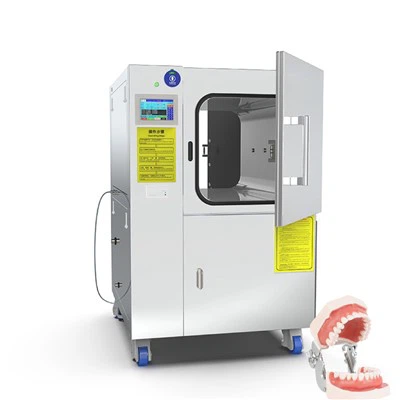
As the supplier of EtO sterilizers to hospital laboratories around the world, I spend a lot of time walking through the tiny, high-stakes hallways of clinical lab facilities—places where a single misplaced step can mean the difference between a sterile surgical tool and one that carries a life-threatening pathogen. Last month, I was on a call with the lab manager at a mid-sized community hospital in Ohio. She mentioned that their EtO process had been running wonky: cycle times were stretching longer than the 90 minutes they’d originally scheduled, their weekly biological monitor (Bowie-Dick test) was coming back positive twice a week, and they were throwing out 10 to 15 trays of delicate endoscopic tools that failed the spore validation test. The kicker? They swore they were pre-cleaning their equipment before loading it into the EtO chamber. That conversation made me pause, because organic matter on supposedly pre-sterilized items is one of the most misunderstood variables in EtO sterilization, and it’s something I see every lab miss when they’re trying to optimize their process. Hospital Laboratory EtO Sterilizers

Let’s start with the basics that every lab tech should know, but that even seasoned supervisors sometimes overlook. Ethylene oxide is a super tiny, highly penetrating gas—its molecular structure is just two carbons, four hydrogens, and an oxygen, so it can seep into narrow lumens, porous materials, and crevices that steam sterilization (autoclaving) can’t reach. That’s exactly why EtO is the gold standard for heat-sensitive equipment like endoscopes, respiratory therapy tools, and even some plastic surgical implants that would melt or warp at 121°C. But for EtO to work, two things have to happen first: the gas has to contact every surface of the item being sterilized, and it has to kill the endospore-forming bacteria that are the hardest to eliminate. Organic matter—think blood, tissue residue, mucus, or even leftover protein from the manufacturing process on newly made plastic tools—gets in the way of both.
Here’s why organic matter is such a stubborn foe for EtO. Organic compounds, especially proteins and lipids, create a physical barrier on the surface of a tool. Imagine a blood stain dried on the hinge of a forceps or inside the lumen of an endoscope: that stain isn’t just a mess—it’s a layer that the EtO gas can’t penetrate. EtO works by alkylating the DNA and RNA of microorganisms, which prevents them from replicating and dying. If the gas can’t reach the microbe because it’s trapped under a layer of organic debris, those microbes stay alive, and your sterilization cycle fails. The Ohio lab I spoke to had been using a 5-minute wipe-down with detergent, but their techs were only cleaning the outside of the endoscopes, not the internal channels where blood and tissue get trapped. When we did a quick test with a portable ATP swab (a tool that measures organic residue), they found the internal lumens had ATP levels 12 times the safe limit after their pre-cleaning step. That’s the root of their problem.
It’s not just physical blocking, either. Organic matter also reacts with EtO gas, tying it up before it can do its job. EtO is a reactive molecule, so it doesn’t hang around in the chamber waiting for microbes. When there’s excess organic residue, the EtO molecules will react with the organic compounds instead of with the spores. That means you need way more EtO gas, longer exposure times, and higher chamber temperatures to get the same level of kill. In the Ohio lab, their cycle time had crept up to 180 minutes—twice the standard for their model of sterilizer—because they were adding extra gas to compensate for the organic load. That extra time means those endoscopes are out of commission longer, which delays patient procedures. It also means more EtO is released into the facility’s air, which is a safety hazard for staff. OSHA has strict limits on EtO exposure (1 ppm over an 8-hour time-weighted average), and extra cycles mean more gas handling, more risk of leaks, and more need for ventilation—something most small community labs don’t have extra space or budget for.
I’ve seen this play out in labs across Europe, Asia, and North America over the last 12 years of selling EtO sterilizers. Last year, a lab in Singapore called me because their EtO system was failing spore tests every week, and they thought their sterilizer was broken. When our service tech inspected the chamber, he found that the lab was loading unused surgical masks (stored in a cardboard box that had some dust on it) into the same chamber as patient tools. The dust and lint on the masks are organic matter, and they were absorbing EtO, leaving too little gas to reach the actual patient devices. Once they separated the masks and wiped down all items before loading, their spore test success rate went back to 100% within a week, and their cycle time dropped by 40 minutes. That’s not a huge investment—just a few extra minutes of pre-cleaning and separating items during loading—but it made a massive difference.
Now, let’s talk about the myth that “only visibly dirty items have organic matter.” I can’t tell you how many times a lab has said, “This tool looks spotless, so it’s ready for sterilization.” Visible cleanliness is not the same as microbiological cleanliness. For example, the internal channel of an endoscope might look completely clear to the naked eye, but there could be microscopic layers of protein residue left over from the last patient procedure. Or a new plastic surgical tray, fresh from the manufacturer, might have leftover manufacturing oils or lubricants that are organic compounds, even though it’s wrapped in plastic and looks new. That’s why biological indicators (BI)—the spore tests labs run every day—are so important, but they’re not enough on their own. If there’s organic matter on the BI strip, it might give a false positive? No, wait—actually, if organic matter is blocking the spores, the BI might seem to pass when it shouldn’t, because the spores are shielded. That’s a scary thought: you think your sterilization worked, but you’re actually sending out tools that are contaminated.
So what can a lab actually do to fix this? Let’s get practical, because I don’t sell “silver bullet” solutions—our sterilizers are designed to work with good lab practice. First, invest in proper pre-cleaning. Not just a wipe with a cloth, but for lumened tools like endoscopes, use a enzymatic cleaner that breaks down organic proteins, and flush the entire channel with the cleaner for the recommended time. Our service team often works with labs to schedule a demo of our pre-cleaning accessories, like channel brushes and automated flush systems, because a lot of small labs don’t have that equipment. Second, use ATP testing to verify pre-cleaning. ATP is a molecule found in all living things, so a low ATP reading means very little organic residue. Labs can pick up a portable ATP swab kit for a few hundred dollars, and it gives a result in 30 seconds—way faster than waiting for a BI test. That’s a game-changer for busy labs. Third, sort items by their organic load. Don’t mix heavily soiled surgical tools with lightly soiled endoscopic ones, and definitely don’t load new, unused items with patient-used ones, even if they look clean. The new items’ manufacturing residues will absorb EtO. Fourth, optimize your EtO cycle to account for load size and organic load. Our EtO sterilizers have programmable cycle settings that let you adjust gas concentration, temperature, and exposure time based on what’s in the chamber—something a lot of older, less flexible models don’t have.
I want to be clear: this isn’t a criticism of labs. I get it—hospital lab staff are overworked, understaffed, and dealing with constant pressure to turn around tools fast. When you’re processing 50 endoscopes a day, the last thing you want to do is spend extra time wiping down every single crevice. But the cost of a failed sterilization cycle is way higher than the time it takes to pre-clean properly. A single contaminated tool can lead to a hospital-acquired infection (HAI), which not only harms patients but also leads to costly malpractice claims, regulatory fines, and even temporary shutdowns of lab departments. The CDC estimates that 1 in 31 hospital patients has at least one HAI on any given day, and a big portion of those HAIs come from improperly sterilized medical tools. That’s why getting this right isn’t just about saving time or money—it’s about patient safety.
Over the years, I’ve built relationships with lab managers because I don’t just sell a sterilizer and disappear. I’m on their side. I’ve seen labs that were struggling with EtO sterilization go from 60% spore test success to 100% just by fixing their pre-cleaning process. The Ohio lab I mentioned earlier? After we walked them through ATP testing and adjusted their loading process, their cycle time dropped to 120 minutes, they stopped throwing out half their trays each week, and their staff’s stress levels went down dramatically. They even bought two additional EtO sterilizers from us because they trusted us to help them solve their problem, not just make a sale.
I also want to address a common question I get: does organic matter affect sterilization with other methods, like steam or hydrogen peroxide? Sure, but it’s a different story. Steam works by denaturing proteins with heat, so organic matter can be a problem, but it doesn’t tie up the steam or physical barrier is less of an issue for steam because high heat can break down most organic compounds. Hydrogen peroxide plasma works by generating free radicals, and organic matter can neutralize those radicals, but EtO’s mechanism makes it particularly vulnerable to organic load because of how it penetrates and reacts. That’s why optimizing for organic matter is even more critical for EtO than for other sterilization methods.
If you’re a lab manager or tech reading this and you’ve had issues with EtO sterilization cycles, long wait times for tools, or failed biological tests, you don’t have to keep guessing. The problem might not be your sterilizer—it might be the organic load on your items. We offer free, no-obligation process audits for hospital labs: our service team will come to your facility, test your current processes, check your cleaning and loading steps, and work with you to adjust your cycle settings if your equipment allows. We don’t push unnecessary upgrades; we just help you use what you have better, and recommend additional tools or training if it makes sense for your specific needs.
Patient safety is at the core of everything we do as EtO sterilizer suppliers, and that starts with making sure your sterilization process works as intended. Organic matter is a silent saboteur in many lab settings, but it’s a problem that’s completely solvable with the right attention to pre-cleaning, loading, and testing. If you’re ready to stop dealing with failed cycles, wasting tools, and risking patient safety, let’s connect. We can walk through your current process, answer any questions about how organic matter impacts EtO, and help you optimize your sterilization workflow.
Scrubber References
- Rutala WA, Weber DJ. Sterilization and Disinfection in Health Care Settings. Clinical Microbiology Reviews. 2019;32(3):e00008-19.
- World Health Organization. Guidelines for the Sterilization of Medical Devices. WHO Press; 2018.
- Occupational Safety and Health Administration. Ethylene Oxide Exposure Limits. OSHA.gov; 2022.
- Association for the Advancement of Medical Instrumentation. ANSI/AAMI ST79: Comprehensive Guide to Steam Sterilization and Sterility Assurance in Health Care Facilities. AAMI; 2017.
Hangzhou Riches Engineering Co., Ltd.
Hangzhou Riches Engineering Co., Ltd. is one of the most professional hospital laboratory eto sterilizers manufacturers and suppliers in China, specialized in providing high quality custom service and ODM service. We warmly welcome you to buy high-grade hospital laboratory eto sterilizers for sale here from our factory.
Address: No. 368, Wenjiao Road, Fuyang District, Hangzhou
E-mail: jason@riches-company.com
WebSite: https://www.eto-sterile.com/
