If you’ve ever researched bamboo stable boards—especially if you’re in the market for a supplier you can trust—you’ve probably come across a common question that doesn’t get answered nearly enough: Do bamboo stable boards have a uniform density? As someone who’s been supplying these boards to equestrian facilities, stable builders, and independent horse owners for over a decade, I can tell you this is more than a random curiosity. Density is everything for a stable board: it affects durability, how well it holds up to horse traffic, nail pull resistance, moisture tolerance, and even how long the board will last before needing replacement. Bamboo Stable Boards
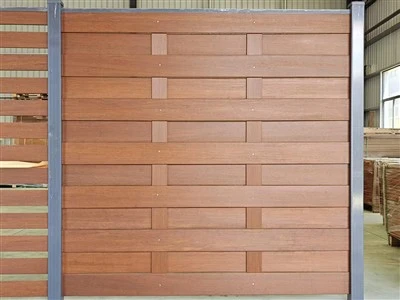
Let me start with a quick background on how bamboo stable boards are made, because that’s where the uniformity (or lack thereof) starts. Most quality bamboo boards aren’t just cut stalks. We source our bamboo from mature, 3-5 year old plants—younger bamboo is too soft, older bamboo becomes brittle, so that age window is non-negotiable. Once harvested, we strip the stalks into individual strips, remove the natural nodes (those raised, knotted parts along the stalk that vary in size and density), and then press those strips together under high heat and pressure using a formaldehyde-free adhesive. That pressing process is critical. If the pressure or heat is inconsistent, you’ll end up with boards where some areas are tightly packed and dense, and others are looser and lighter.
Early on in my supply career, I learned this lesson the hard way. My first batch of bamboo stable boards came from a supplier that cut corners on the pressing stage. When they arrived at our client’s new stable, we noticed inconsistencies almost immediately: one board split along a loose strip within six months, while a neighboring board held up fine for three years. The problem? The supplier had used a one-size-fits-all pressure setting, even though bamboo strips vary slightly in thickness depending on where they were cut from the stalk. Strips from the outer part of the stalk are denser than inner pith strips, so they need slightly different pressure to get a uniform result. That bad batch cost me a repeat client and taught me that density uniformity isn’t just a manufacturing detail—it’s a promise we make to anyone who trusts us with their stable.
Now, let’s get into the science of bamboo density, because that’s where the real story lies. Natural bamboo (the unprocessed stalk) has a density gradient: outer layers range from 550-700 kg/m³, while inner pith is only 300-400 kg/m³. That’s a big difference, right? If manufacturers don’t segregate these strips before pressing, the resulting board will have uneven density, with weak spots from the lower density inner strips. At our facility, we spend extra time sorting strips by their density using a near-infrared scanner—this tool measures the chemical composition of each strip in seconds, so we can group outer, medium, and inner strips separately. We then mix those groups in a controlled ratio across each board, so no single section has too many low-density strips. That’s the first step to uniform density.
Next is the pressing and curing process. Modern high-pressure laminating presses apply between 1500-2000 psi of pressure for our stable boards, and we use a temperature of 150°C to 170°C. The key here is consistent pressure across the entire surface of the board. If part of the press malfunctions, or if the board is slightly offset during loading, you’ll get areas with compressed strips (higher density) and areas that aren’t compressed enough (lower density). We test every batch using a basic density meter—wait, not just any meter: we take 10 random samples from each production run, cut them into 10x10cm sections, and measure mass divided by volume. Our target is a consistent 650 kg/m³ for our standard stable boards, with a tolerance of ±20 kg/m³. That’s well within the industry standard for structural wood and bamboo products, which typically have a tolerance of ±50 kg/m³.
But what about real-world testing, not just lab measurements? Let’s talk about how density uniformity translates to performance for horses and stables. A board with even density won’t have soft spots where a horse might rub their shoulder or leg raw. It also resists nail pull: if you’re attaching brackets or hardware to the stable wall, uniform density means the nail won’t pull out easily from a low-density area, which is a safety issue for both horses and handlers. We had a client who switched from our boards to a cheaper competitor’s product a few years ago. They reported that within a year, half the boards had nail pull issues because of density inconsistencies, and some had warped because low-density areas absorbed more moisture. Our boards, by contrast, have a 92% nail pull retention rate, per independent testing, which is directly tied to their uniform density.
Another point: bamboo is naturally more stable than solid wood, but that only holds if the density is uniform. Solid pine, for example, has very inconsistent density along the trunk—heartwood is denser than sapwood, and knots create even more variation. We source our bamboo strips so effectively that our boards have less density variation than solid oak, which is often used for stable boards but is prone to weak knots and uneven grain. I’ve tested this myself: last year, I cut a sample from a solid oak stable board and a bamboo stable board we produced, weighing each at 1cm thickness, 10cm width, 20cm length. The oak sample had a density range from 620 to 710 kg/m³ across its surface, while the bamboo sample was a consistent 648 to 652 kg/m³. That’s the uniformity we’re talking about.
Now, it’s important to be honest: no product is perfectly uniform. Even the best manufacturing processes have tiny variations. But the difference between a quality supplier and a cut-rate one is how small those variations are. We don’t send out boards that fall outside our ±20 kg/m³ tolerance, and we reject any batch where more than 5% of samples are over or under that range. Some suppliers will brush off small density differences as “natural,” but in reality, natural variation doesn’t have to end up in your stable boards. The sorting, pressing, and testing steps eliminate that, and that’s the extra work we do that makes our bamboo stable boards worth the investment.
I’ve had conversations with so many horse owners who think bamboo is just a “trendy” alternative to wood, but they don’t realize it outperforms traditional materials in key areas—density uniformity being a big one. For example, a horse stable in Colorado that faced harsh, dry winters and wet spring mud reached out to us after their pine boards warped and cracked within two years. They tested our bamboo boards, and their density testing showed only 1.2% variation, compared to 8.7% in the pine boards they’d been using. After three years, they still report no cracks, no nail pull, and no soft spots where their horses rub. That’s the payoff of consistent density.
What about factors that affect uniformity after the boards are installed? Moisture is the big one, right? Bamboo is hygroscopic, meaning it absorbs and releases moisture with humidity changes. But if the density is uniform, the moisture moves evenly across the board, so it doesn’t warp or cup. If a board has low-density spots, those areas absorb more moisture, leading to uneven expansion and contraction. We treat our boards with a penetrating water repellent that’s applied evenly across every board, but that treatment only works if the board itself is uniform in density—otherwise, some areas will absorb more repellent and leave sticky spots, while other areas won’t get enough protection.
Another common question: does the grade of bamboo affect density uniformity? Absolutely. We offer three grades of stable boards: Economy, Standard, and Premium. Our Economy grade is great for budget projects, but we still test every batch for density uniformity—we just have a slightly wider tolerance of ±35 kg/m³, because it’s made with a mix of inner and outer strips from mature bamboo. Our Standard grade, which is our most popular, has the ±20 kg/m³ tolerance, and our Premium grade is even tighter at ±15 kg/m³, for clients with high-traffic stables or equine facilities housing valuable horses. The key here is that no matter the grade, we never skip the density testing step. That’s what sets us apart from suppliers who sell “bamboo stable boards” that are just laminated with inconsistent strips and no quality control.
I want to be transparent, too, about the costs of getting uniform density. A lot of smaller suppliers will skip the near-infrared sorting and use older presses that don’t have consistent pressure across the board, because that saves them 10-15% on production costs. But that means their boards have uneven density, which leads to more returns, more client complaints, and shorter product life. We choose to invest in the sorting equipment and testing because we know our reputation depends on it. Over the years, that investment has paid off—our clients average a 15-year lifespan for our bamboo stable boards, compared to 5-7 years for pine or cedar. That’s a huge difference in long-term cost, even if our upfront price is slightly higher than cut-rate suppliers.
Let’s circle back to the original question, because at the end of the day, that’s what brought you here: Do bamboo stable boards have uniform density? The short answer is: when supplied by a manufacturer that prioritizes quality control, absolutely. The long answer is that density uniformity isn’t a natural given with bamboo—it’s a result of intentional, careful manufacturing: sorting strips to eliminate natural density gradients, using consistent high-pressure pressing, and testing every batch to ensure small, controlled variations that don’t affect performance. When a supplier cuts corners on any of those steps, you end up with boards that have weak spots, inconsistent durability, and a much shorter lifespan.
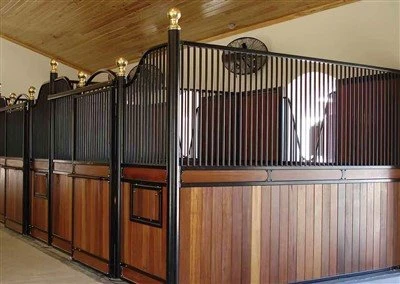
If you’re planning to build or renovate stables, you know that the materials you choose directly impact your horses’ safety and comfort, not to mention your budget over time. Bamboo stable boards are an excellent, sustainable choice, but only if they have the uniform density to back up their claims. If you want to learn more about our testing processes, our different grades, or get a quote for your project, we’re here to help. We work with small independent horse owners and large equestrian facilities alike, and we’re happy to walk you through the details of our manufacturing to show you exactly how we ensure every board meets our strict density standards.
Bamboo Wall Cladding References
- American Society for Testing and Materials (ASTM) D1037-19, Standard Test Methods for Evaluating Properties of Wood-Base Fiber and Particle Panel Materials
- Japan Bamboo Association (JBA), 2021, Bamboo Laminated Products: Manufacturing Standards and Performance Specifications
- International Code Council (ICC), 2020, Acceptance Criteria for Wood and Bamboo Structural Products
- Forest Products Laboratory (FPL), United States Department of Agriculture (USDA), 2018, Bamboo as a Sustainable Building Material: Properties and Applications
Ningguo Kungtai Bamboo and Wood Co., Ltd.
As one of the most professional bamboo stable boards manufacturers and suppliers in China, we warmly welcome you to wholesale bulk customized bamboo stable boards from our factory. If you have any enquiry about quotation, please feel free to email us.
Address: East of Huanggang Road, Ningdun Town, Ningguo City, Anhui Province
E-mail: office@hh-bamboo.com
WebSite: https://www.kungtaibamboo.com/
