If you’ve ever sat in on a process engineering meeting, a design review for a chemical plant, or a shop floor talk at a medical device manufacturing facility, you’ve probably heard the same question come up: “Is titanium equipment really that much more expensive than stainless steel or other common metals?” As someone who’s been a titanium equipment supplier for over 18 years, I can tell you this is one of the most debated, and often misunderstood, questions in our industry. I’ve had plant managers walk into my shop asking for a “cheap titanium tank” only to realize that “cheap” isn’t a word that belongs in the same sentence as high-performance titanium equipment—not because titanium is overpriced, but because its real value isn’t in its upfront cost, but in the total cost of ownership. Titanium Equipment
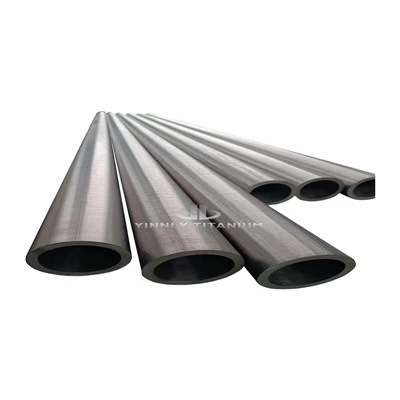
Let’s start with the basics: why is titanium even a consideration for equipment in the first place? Most standard industrial equipment is made from carbon steel or 316L stainless steel. These materials are cheap, easy to machine, and familiar to almost every engineer. But when you’re working with corrosive chemicals—think sulfuric acid, hydrochloric acid, brines, or even certain organic solvents—stainless steel can fail in months, or even weeks. I learned this lesson early in my career, when I sold a set of stainless steel heat exchangers to a fertilizer plant in the Midwest. Within six months, they were replacing the equipment because pitting corrosion had eaten through the tubes, causing leaks, production downtime, and even a small safety incident when corrosive fumes escaped. The plant ended up spending three times the original cost on emergency repairs, lost 12 days of production, and had to pay for hazardous waste disposal from the failed components. That experience taught me that upfront cost is only one piece of the puzzle, and for many applications, titanium isn’t just an option—it’s the only option that makes long-term financial sense.
So, what makes titanium equipment more expensive upfront? The answer is a mix of raw material costs, processing requirements, and quality control. Let’s break down raw materials first. Titanium ore is abundant in the Earth’s crust, but refining it into usable metal is a complex, energy-intensive process. The Kroll process, which is the most common method for producing titanium sponge, involves heating titanium tetrachloride with magnesium in a vacuum-sealed vessel at temperatures over 1,000°C. This process requires a huge amount of energy, and it’s highly specialized—only a handful of facilities around the world can produce high-quality titanium sponge. Compare that to stainless steel, which is made from iron ore, chromium, and nickel, all of which are much easier to refine and process. The price of titanium sponge has historically been two to three times the price of 316L stainless steel, and when you add in the cost of forming, welding, and machining titanium, the difference in upfront equipment cost becomes even clearer.
But here’s the part most people don’t tell you: titanium’s processing isn’t just about cost—it’s about quality, and cutting corners during processing can be catastrophic. Titanium reacts with oxygen, nitrogen, and hydrogen at high temperatures, so welding and forming titanium requires strict control of the environment. Welding titanium in an open shop, like you might do with stainless steel, can lead to porosity, brittleness, and weak joints that will fail under pressure or in corrosive environments. That’s why every weld in our titanium equipment is done in a specially controlled argon chamber, with full x-ray and pressure testing after every step. We also use only certified titanium from mills that meet ASTM and ASME standards—no cheap, untested scrap. This level of quality control adds to the cost, but it’s the difference between equipment that lasts 20 years and equipment that fails in two.
Now, let’s talk about total cost of ownership (TCO), because this is where titanium really shines. I work with a chemical manufacturer in Texas that had been using 316L stainless steel reactors for their specialty polymer production. The stainless reactors would corrode after an average of 18 months, requiring full replacement every two years. The total cost for each replacement—equipment, installation, downtime, waste disposal—was around $120,000 per reactor. When they switched to our titanium reactors, the upfront cost was $220,000, but since 2019, those reactors haven’t needed a single replacement or major repair. I calculated their TCO in 2023: over four years, they spent $240,000 on stainless reactors, plus another $80,000 in downtime and repair costs. With titanium, they’ve spent $220,000 total, and they’re still using the same equipment today. That’s a savings of $100,000, plus the elimination of the risk of unplanned downtime that can cost a plant thousands of dollars an hour in lost production.
Titanium also outperforms other metals in extreme conditions, which can make it indispensable for specific applications. For example, in desalination plants, the saltwater is extremely corrosive to metals. I supplied a set of titanium condenser tubes to a coastal desalination project in Florida a few years ago. The original design called for copper-nickel tubes, which the engineer thought would be cheaper. But after two years of operation, the copper-nickel tubes had severe corrosion and biofouling, reducing the plant’s water output by 15%. They switched to titanium tubes, and now, eight years later, those tubes are still running at full capacity. The initial cost was 40% higher than copper-nickel, but the plant has avoided millions of dollars in replacement and maintenance costs. For industries like desalination, pharmaceuticals, and aerospace, where consistency and safety are non-negotiable, that upfront premium is a no-brainer.
Of course, titanium isn’t always the right choice, and I never push it on clients when a cheaper material will work just as well. For example, a food and beverage processing plant making bottled water might get years of reliable service from stainless steel tanks, and there’s no need to spend extra on titanium. I once had a client who wanted titanium for a small water storage tank, and after walking them through the costs and their application, they realized it was completely unnecessary. We used 304 stainless steel instead, and they saved thousands of dollars without any loss of performance. The key is matching the material to the application, not defaulting to the cheapest option or the most expensive.
Another common misconception is that all titanium equipment is the same. I’ve seen cheap titanium vessels sold online for a fraction of what we charge, and those are the ones that end up failing. Those products are often made with lower-grade titanium, like Grade 2, but with improper processing—welds done without argon shielding, no quality testing, and shortcuts in forming. I once had a small business owner come to me with a broken titanium heat exchanger he’d bought online for $5,000, compared to our quote of $12,000. He said it should be identical, but when we tested it, we found it was made with a titanium alloy that had high levels of iron impurities, and the welds were so porous that water was leaking through the joints. He’d lost his $5,000, plus the cost of production downtime when it failed. That’s why it’s so important to work with a reputable titanium supplier who understands the material and follows strict industry standards.
So, to answer the original question: yes, titanium equipment usually has a higher upfront cost than carbon steel, stainless steel, or copper-nickel equipment. But that higher upfront cost is tied to the material’s unique properties, the specialized processing required to make it durable and safe, and rigorous quality control to ensure it meets industry standards. When you factor in total cost of ownership, titanium often ends up being the more cost-effective choice for applications where corrosion, high pressure, or extreme temperatures are a concern. It’s not a one-size-fits-all solution, but for the right applications, it’s an investment that pays off for decades.

After 18 years in this business, I’ve seen clients make the mistake of choosing the cheapest option only to pay for it later, and I’ve seen them invest in quality titanium equipment that’s run smoothly for 20 years or more. If you’re wondering if titanium equipment makes sense for your operation—whether you’re in chemical processing, pharmaceuticals, desalination, or any industry where performance and reliability matter—reach out to our team to discuss your specific needs. We can walk you through the costs, the material properties, and the total value, so you can make an informed decision that works for your business.
Titanium Ingot References
- ASME Boiler and Pressure Vessel Code, Section VIII, Division 1: Rules for Construction of Pressure Vessels. American Society of Mechanical Engineers, 2022.
- The Physical Metallurgy of Titanium Alloys. Titanium Industry Development Association, 2021.
- “Corrosion Resistance of Titanium in Industrial Environments.” NACE International, 2020.
- Total Cost of Ownership for Industrial Process Equipment. Process Industry Practices, 2019.
- “Titanium Processing and Fabrication Guidelines.” American Welding Society, 2022.
Baoji Yinnly Titanium Co., Ltd.
Baoji Yinnly Titanium Co., Ltd. is one of the most professional titanium equipment manufacturers and suppliers in China, featured by quality products and good service. Please rest assured to buy bulk titanium equipment in stock here and get quotation from our factory. Customized orders are welcome.
Address: Unit 902, Building 1, Creative Building, No. 195, Gaoxin Avenue, High-tech Zone, Baoji City, Shaanxi Province
E-mail: anna@yinnlyti.com
WebSite: https://www.yinnlyti.com/
