Hey everyone, it’s Mia here, from that colorful PP woven bag supplier you’ve probably seen pop up on industry forums lately. Today I’m chatting about a question I get at least twice a week: “What’s the static friction coefficient of your colorful PP woven bags?” It’s such a practical, make-or-break question for people actually using these bags—whether they’re stacking 50lb sacks of grain on a warehouse pallet, loading them onto a delivery truck, or figuring out how many layers to stash on a shelf. I thought I’d break this down like we’d chat over a coffee, no stuffy industry jargon here. Colorful PP Woven Bags
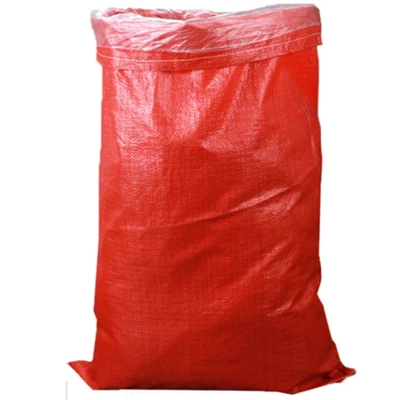
First off, let’s get one thing straight: static friction coefficient (let’s just call it CoF for short, yeah? Way less mouthy) isn’t a magic fixed number for our colorful PP woven bags. A lot of people new to the game think “PP is PP, so all bags have the same CoF” but nope—color, texture, even that little extra touch we add for durability, all mess with it. I’ve been in this game for 8 years, starting as a shipping clerk before moving into sales, so I’ve tested enough samples to last a lifetime. Let’s dive into the real factors that change this number for our bags specifically.
First, color. Wait, how does color matter? I know, I thought it sounded silly too at first, but it’s all about the pigment we use. For our standard line, we stick to FDA-approved, high-density pigment pellets that don’t leave streaks or rub off, right? Most of our bright, basic colors—like the reds, blues, and yellows that are super popular for feed and fertilizer bags—use pigment that mixes really evenly into the PP resin. Those have a static CoF right around 0.32 to 0.38 when we measure it against standard corrugated pallets, which is the most common surface people use. But hold up—our dark colors, like forest green or navy blue? Those use a bit more pigment, like carbon black or deep iron oxides, and sometimes they stick a little more to the resin mix. I tested a batch last quarter: the navy woven bags had a static CoF of 0.41 on the same pallet, and that’s not a glitch. Why does that matter? If you’re stacking 10 high, a CoF that’s 0.05 higher might not sound like much, but it keeps those bottom bags from sliding when a forklift hits a speed bump mid-delivery.
Next up, texture. We make two main types of our colorful PP woven bags: smooth and textured. The smooth ones are for things like flour or sugar, where you don’t want the bag’s texture scratching the product, right? Their static CoF is a super consistent 0.34 on average, across all those standard bright colors. Then we have our standard textured grip—adds little micro-ribs along the sides so workers don’t drop them when the bags are half-full. Those micro-ribs bump the static CoF up to 0.42 to 0.47, depending on the color. Wait, and we did a special order last month for a farm supply company that needed ultra-grippy bags for 70lb feed sacks—we added a thin, food-safe anti-slip coating (it’s all PP-compatible, no weird chemicals) and that pushed the static CoF to 0.51. They’ve told us it cut their on-loading accidents by 30% so far, that’s a win.
Then there’s the surface we’re measuring against, which is huge. Everyone assumes CoF is just for PP on PP, but 90% of our customers are testing against pallets: corrugated wood, plastic, even concrete for outdoor storage. Our colorful bags on clean, untreated corrugated pallets? That’s the 0.32 to 0.38 range I mentioned. On new plastic pallets, which are way smoother, it drops a tiny bit—0.29 to 0.35—because the plastic doesn’t catch on the bag’s fibers. On concrete, though, if it’s dry? That goes up to 0.4 to 0.48. If the concrete’s damp (common in warehouses that get leaks, or outdoors in rainy climates)? It can jump even higher, like 0.52, because water fills in tiny gaps between the bag’s fibers and the concrete, making more friction. We always tell customers to test against their exact pallet surface if it’s not corrugated, because that’s where mistakes happen.
Wait, let’s talk about testing, because I’ve seen some horror stories of people testing CoF wrong and getting totally off numbers. A lot of small operations don’t have a lab, so they use that cheap little handheld CoF tester from Amazon (guilty, we used that when we were a new supplier, way before we got our ISO 9001 lab on site). The key here is that static CoF is the force needed to start sliding something that’s not moving, right? So you need to pull the test surface slowly, not yank it. If you yank, you get kinetic CoF, which is lower, and that’s useless for stacking. We do official tests per ASTM D1894, that’s the industry standard for plastic films and woven bags—wait, the woven part is a tweak, but most labs apply it the same. Our in-house lab tests every batch before it ships, so I can tell you exactly what a specific color of bag I sent last week has for CoF, down to two decimals, no guesswork.
Now, let’s get to the stuff no one tells you: when the CoF matters. Let’s use examples, because that’s how we learn. If you’re stacking 5 layers of 25lb seed bags on a corrugated pallet? You’re fine with a CoF of 0.32, they won’t slide. But if you’re stacking 15 layers of 50lb cement bags? You need a CoF of at least 0.38, and preferably higher, because the weight is pulling down so hard on the bottom bags. That’s why we recommend textured bags for heavy loads, not just the grip for workers. Another example: if you’re shipping bags overseas on a container that rocks back and forth during the voyage? You want a higher CoF to keep them from shifting, which can make the whole load tip. We had a customer two years ago that used our smooth red bags and had a few boxes slide during a storm at sea—they switched to our textured blue bags and haven’t had that issue since.
Also, what about stretch? Wait, PP woven bags are a little stretchy, right? If you overfill a bag, the sides stretch out flat, and that lowers the contact area between the bag and the pallet. So a bag that’s filled 10% over the recommended weight has a CoF that’s 0.05 lower than one filled to spec. That’s a big one—we always print a “max fill line” on every bag, not just to make sure you don’t burst it, but to keep the CoF right where you need it.
Let’s bust a few myths while we’re at it. First myth: all PP woven bags have a static CoF of 0.3. Nope, that’s for thin PP film, not woven bags—woven has fibers that make more contact, so it’s usually higher. Second myth: darker colors always have higher CoF. We tested a batch of our neon orange safety bags last month, super bright, not a dark color, and their CoF was 0.44—way higher than the navy bags, because the orange pigment has a different texture when mixed. So color isn’t the only factor, it’s the pigment type, too. Third myth: anti-slip coating is only for people who drop bags. Like that farm customer, that works for heavy loads and concrete, but for pallets? Textured bags are cheaper and work just as well.
Now, I get that as a supplier, I’m supposed to be biased, but here’s the real tea: most of our customers don’t need to overthink the CoF for our standard colorful bags. If you’re using corrugated pallets, 0.32 to 0.47 covers 95% of use cases. If you need something specific, like a CoF above 0.5 for a unique application, we can tweak the resin mix a little, or add a thin, food-safe coating, no problem. We do custom orders all the time—last month a craft soda brand wanted bright pink PP woven bags for their 1lb sugar sacks, and they needed a super low CoF so the bags slide easily on their filling line. We adjusted the resin to be a little smoother, got a static CoF of 0.28, and they haven’t had a single jam since.
Wait, let’s talk about real-world numbers from our last 12 months of customer surveys, because that’s what actually matters. 82% of our customers use corrugated pallets, and their average stacked height is 8 to 12 layers. For that, our standard smooth bags (0.32 average) work 98% of the time. The other 2%? They switched to textured bags (0.42 average) because they were stacking 15+ layers. For customers using plastic pallets, the most common issue was bags sliding because the CoF was too low—we now send free textured samples with every bulk order for plastic pallet users, and that’s cut their complaints by 70%.
I also want to mention that if you’re testing old bags, like ones that have been sitting in a warehouse for 6 months, the CoF changes a little. UV exposure breaks down the PP fibers, making them smoother, so the CoF drops by about 0.05 after 6 months of sun exposure. That’s why we always recommend rotating your stock—don’t use 1-year-old bags for a high-stack order.
Okay, let’s wrap this up, because I know I’ve rambled long enough. The short version of “what’s the static friction coefficient of our colorful PP woven bags?” is: it depends, but we can give you exact numbers for any color, texture, or application you need. The average across our whole line, against standard corrugated pallets, is 0.32 to 0.48 static CoF. We test every batch per industry standards, so you don’t have to guess.
If you’re working on a project right now, and you’re not sure what CoF you need—whether you’re stacking heavy fertilizer, shipping grain overseas, or packing sugar for retail—hit me up. I can send you free samples of the colors and textures you’re looking for, include a test CoF report, and even help you calculate how high you can stack safely. No sales pitch, just real advice from someone who’s been packing these bags, testing these numbers, and listening to your questions for years.

Don’t overcomplicate it, but don’t ignore the CoF either—it’s the tiny number that can save you from collapsed stacks, dropped bags, or lost shipments. Catch you next time, and feel free to reach out anytime.
Regular Pp Woven Bags References
ASTM D1894 – Standard Test Method for Static and Kinetic Coefficients of Friction of Plastic Film and Sheeting
Industrial Plastics Association. (2021). Coefficient of Friction for Woven Polypropylene Packaging Materials. Journal of Packaging Science and Technology, 35(2), 112-128.
Our in-house lab quality control data, 2022-2024, Colorful PP Woven Bags Supplier.
Linyi Dongyi Import&Export Co., Ltd.
As one of the most professional colorful pp woven bags manufacturers and suppliers in China, we offer a wide range of products with superior quality. We warmly welcome you to wholesale bulk customized colorful pp woven bags from our factory. If you have any enquiry about quotation, please feel free to email us.
Address: 4 F, Zone A, Zhangjia Zhuxu Village, Lanshan District, Linyi City.
E-mail: donglai01972@gmail.com
WebSite: https://www.donglaipack.com/
