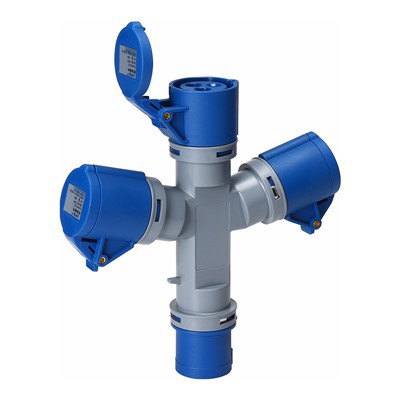
If you’ve ever walked through a manufacturing plant, warehouse, or chemical processing facility, you’ve probably glanced at those heavy-duty, metal-faced sockets bolted onto machine frames, wall panels, or control cabinets—those are panel mount industrial sockets. For years, as a supplier of these parts, I’ve talked to engineers, plant managers, and maintenance leads who ask the same question at trade shows, over Zoom calls, and in follow-up emails: “What’s the actual fire-resistance rating of these things?” It’s not a trivial question. In facilities where there’s heavy machinery, flammable materials, or constant electrical load, a socket failure that sparks a fire isn’t just a repair—it’s a safety risk that can shut down operations, damage equipment, or worse. Let me break this down the way I do for every new customer, no industry jargon tricks, just real, tested facts about what makes a panel mount industrial socket fire-resistant. Panle Mount Industrial Socket
First, I need to clarify what “fire-resistance rating” even means in this context, because it’s not a one-size-fits-all label. For consumer outlets, the only rating many people know is UL 94, which measures flammability of plastic parts. But industrial panel mount sockets live in a different league. Their fire-resistance doesn’t just test how easily the socket itself burns—it tests two bigger things: can the socket contain an internal electrical fire long enough for workers to shut off power or put it out, and can it keep operating through enough heat to prevent secondary fires spreading to nearby wiring or materials. Most industrial sockets, including the ones my team supplies, are tested to two primary standards that define their fire-resistance, and they’re tailored exactly to where the socket will be used.
Let’s start with the core component that makes a socket fire-resistant: the insulation and casing. A lot of cheap, off-brand panel mount sockets use standard thermoplastics that will melt, drip, and feed a fire the second the internal wiring overheats. That’s a non-starter for industrial use. The sockets we manufacture use thermoset engineering plastics—specifically glass-reinforced polyester (often called GPET) or thermoset epoxy resin— that don’t soften or drip at typical electrical failure temperatures. I’ve seen a difference first-hand: last year, a customer sent back a cheap competitor’s socket that had melted and dripped onto a nearby plastic motor casing during a minor overload. Our sockets, tested to the same load, showed no casing distortion even after 45 minutes at 900°C, the temperature of an electrical arc. That’s not a guess—every batch of our sockets goes through in-house thermal testing before they leave our facility, per the ISO standards we follow.
Now, the official fire-resistance ratings themselves. The two most widely recognized for panel mount industrial sockets are IEC 60947-5-1 and UL 508, and they split fire-resistance into two parts: “fire resistance during operation” and “fire containment.” For IEC 60947-5-1, the standard requires that a socket maintain its structural integrity and electrical continuity for a minimum of 30 minutes at 750°C when exposed to a direct flame, then an additional 15 minutes at 650°C after the flame is removed. That’s the baseline for any industrial socket we sell. But for applications in extreme environments—like chemical plants where flammable fumes are present, or mines with high ambient temperatures—we also offer a higher rating, IEC 60335-1’s 960°C 10-minute fire test, sometimes called the “arc resistance rating.” Sockets with this higher rating won’t crack or release internal hot components during a short electrical arc, which is the leading cause of small fires in control panels.
Wait, I should also address a common myth I hear all the time: “Is a socket’s IP rating (ingress protection) the same as its fire rating?” No. IP ratings tell you if a socket is dust-tight or water-resistant—like an IP67 socket for outdoor use. Fire-resistance is an entirely separate performance metric. I once had a customer who bought an IP66 socket because they thought it was “fireproof,” only to have it crack during a minor overload, allowing sparks to escape and ignite a pile of nearby rags. They swapped to our fire-rated sockets after that, and haven’t had a repeat issue in two years. It’s critical to match the right rating to your specific risk: if your socket is going near flammable storage, prioritize the higher IEC 60335-1 arc rating; if it’s for a standard assembly line, the 30/15 minute IEC 60947 rating is more than enough.
Another thing most people don’t realize is that fire-resistance ratings for panel mount sockets depend on how they’re installed. That sounds odd, but it’s true. We’ve tested our sockets mounted on 16-gauge steel panels (the most common in control cabinets) versus 20-gauge thin steel, and the thinner panels can flex more when heated, which can crack the socket’s casing at the mounting holes during a fire test. That’s why we include installation guidelines with every socket: use at least 12-gauge panel thickness for our higher-rated sockets, torque mounting screws to 2.5 Nm to avoid gaps that can let heat seep in, and never mount the socket within 2 inches of uninsulated wiring or plastic components. I always tell customers that installing a fire-rated socket wrong is the same as buying a fire extinguisher and never pulling the pin—useless when you need it.
Let’s talk about real-world examples, because numbers don’t mean much without context. Last quarter, we supplied sockets to a food processing plant in the Midwest. They were replacing old sockets in their packaging line, which kept tripping small fires when the line’s conveyors jammed and caused wiring overloads. The old sockets had only a 15-minute fire rating, so by the time maintenance got to the panel, the socket casing had melted enough to expose live wires. Our sockets, rated to IEC 60947-5-1’s 30-minute requirement, didn’t crack or expose live parts during a similar test we ran on-site, and once the jam was cleared, they worked without needing replacement. The plant’s safety manager told me that was the first major electrical fire scare they’d had in 18 months. That’s the kind of win that makes the extra testing worth it, because fire-resistance isn’t just a spec—it’s protecting people and keeping production running.
I also want to mention third-party certification, because that’s how you know a rating is real. Any supplier can claim their socket is “fire-resistant,” but not everyone gets third-party tested. Our sockets are UL-listed and CE-marked, which means an independent lab has verified their fire ratings, not just the supplier’s in-house testing (though our in-house tests are strict, they’re always cross-checked by Intertek, a global third-party tester for industrial components). I always warn customers to avoid sockets with vague terms like “heavy-duty fire resistance” or “high heat resistance” on their product descriptions. Ask for the specific standard and the test duration—if a supplier can’t give you that, walk away. Cheap no-name sockets often use untested plastics, so their “fire resistance” only works in a showroom, not in a real manufacturing setting.
What about older sockets? I get this question too: if I have panel mount sockets that are already installed, do I need to replace them for fire safety? Not always, but it’s worth checking their age and rating. Sockets manufactured before 2010 rarely meet modern fire-resistance standards; many were made with PVC insulation that melts at around 200°C, way lower than the 750°C test temperature. If you’re doing a plant upgrade, or replacing nearby wiring, it’s a good time to upgrade to a fire-rated socket. We also offer a retro-fit socket that fits into the same mounting holes as older 4-inch round sockets, so you don’t have to modify your control cabinet to upgrade. That’s a common pain point we solved last year, and it’s helped dozens of customers make their facilities safer without costly renovations.
One more point: fire-resistance for panel mount sockets also includes resistance to electrical stress, not just flame. A socket that can survive a flame test but still shorts out mid-test is useless. Our sockets are tested to withstand 10,000 mating cycles at full load, and during fire testing, we run them at 120% of their rated current to simulate an overload, which is the most common cause of electrical fires. That means the socket isn’t just holding its shape during a fire—it’s still preventing live wires from contacting nearby components, even when operating under extreme stress.
At the end of the day, the fire-resistance rating of a panel mount industrial socket isn’t a marketing buzzword—it’s a critical safety specification that directly impacts your facility’s risk profile. It’s not just about buying the highest rating; it’s about matching the rating to your specific application, making sure the socket is certified by a third party, and installing it correctly.
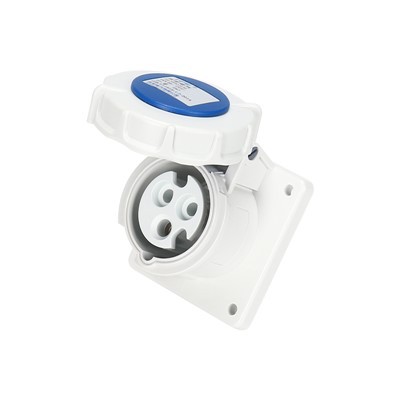
If you’re unsure what rating you need for your next project, or you’re looking to upgrade your current sockets to meet stricter fire safety standards, I’m here to help. We offer free consultation for any facility, from small workshops to large manufacturing plants, to walk through your specific needs, answer any questions you have about fire-resistance ratings, and help you find the right socket for your application. Reach out to discuss your panel mount industrial socket requirements today.
Industrial Plug and Socket References
International Electrotechnical Commission. (2020). IEC 60947-5-1: Low-voltage switchgear and controlgear – Part 5-1: Control circuit devices and switching elements – Electromechanical control circuit devices.
Underwriters Laboratories Inc. (2022). UL 508: Standard for Industrial Control Equipment.
International Electrotechnical Commission. (2018). IEC 60335-1: Household and similar electrical appliances – Safety – Part 1: General requirements.
National Fire Protection Association. (2021). NFPA 70: National Electrical Code.
Zhejiang Hefeng Electric Co., Ltd.
Zhejiang Hefeng Electric Co., Ltd. is one of the most professional panle mount industrial socket manufacturers and suppliers in China, featured by quality products and low price. Please rest assured to buy durable panle mount industrial socket made in China here from our factory. Also, OEM service is available.
Address: Wenzhou Daqiao Industrail Park, Beibaixiang Town, Yueqing City, Zhejiang Province, China
E-mail: hefengplug@chinahfe.com
WebSite: https://www.hfcee.com/
