Hey folks, let’s cut the crap—if you’ve ever dealt with wonky power (that random fridge compressor hum, lights flickering so bad you think you’re having a strobe light party, or lab gear throwing a fit mid-experiment), you know a voltage stabilizer isn’t some random box you stick in a corner. I’ve been in this game for 8 years now, selling stabilizers to shops, factories, and even a few home gamers who refuse to let their $2k PC turn into a paperweight. And here’s the thing most buyers sleep on: 90% of the headaches you get from “bad stabilizers” aren’t just bad luck—they’re straight-up quality issues with the unit itself. Votage Stabilizer
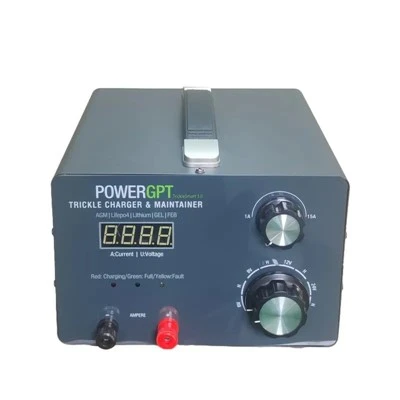
Let’s start with the most obvious stuff: component quality. I see this all the time—guys come in with cheap stabilizers they bought off Amazon for $50 thinking it’ll work for their small workshop, and within a month the transformer’s fried. Wait, transformers? Yeah, that’s the heart of any stabilizer. Cheap units use thin, low-grade copper wire (or even aluminum, let’s be real) that heats up faster than a pizza box in a hot car. Over time, that wire melts insulation, causes short circuits, and boom—your stabilizer becomes just another paperweight. The good ones we sell? We use 100% oxygen-free copper windings. No cutting corners there. Oxygen-free doesn’t corrode as easy, handles more current without overheating, and lasts way longer. I had a client with a 12-year-old stabilizer we sold them back in 2011 that’s still going strong for their bakery—they even use it to run their proofing ovens, which draw a ton of power. The cheap aluminum-wound ones I’ve had people bring me? Most die in under 2 years, if that.
Then there’s the relay or regulator setup. A lot of budget stabilizers use mechanical relays to switch between voltage taps. Those things click like crazy every time the power dips or spikes, and over time, the contacts wear out. That’s why you’ll see some cheap units start skipping voltage steps, leaving your gear running on wonky voltage for hours. What’s the alternative? Solid-state regulators, or high-grade relays with gold-plated contacts. Yeah, gold-plated—sounds fancy, but it’s just a durability thing. No more janky clicks every 2 seconds, and the regulator adjusts voltage smooth as butter, no dropouts. I once had a guy with a photography studio call me panicking because his cheap stabilizer fried $8k worth of camera gear when the relay stuck in the “low voltage” position. He replaced it with our solid-state unit, and he hasn’t had an issue in 5 years. Moral of the story: the switching mechanism is make-or-break, and cheap parts here = dead gear.
Next up is response time. Let’s say the power grid drops to 100V (way below the 120V your fridge needs) or spikes to 140V. How fast does the stabilizer fix that? If it’s a cheap unit with slow electronics, you’re looking at 100-200 milliseconds of lag. That might not sound like much, but for sensitive gear—like medical equipment, server racks, or even a modern TV with a smart chip—that’s enough time to cause a surge or dip that fries circuits. The good ones we offer have response times under 20 milliseconds. No lag, no gaps, just steady voltage the second something goes off. I’ve tested this myself with an oscilloscope once, and the difference is night and day. A cheap unit I tested had a 150ms lag, which left a sharp voltage dip that knocked out a small desktop server. Our unit? You couldn’t even see the blip on the screen. For places like small businesses with POS systems or home offices with work laptops, that lag might not be a huge deal, but when you’re running critical gear, it’s non-negotiable.
Efficiency is another big one, and people don’t talk about it enough. If your stabilizer is 80% efficient, that means 20% of the power it’s handling is getting turned into heat and wasted. Not only does that drive up your electric bill, but all that extra heat also wears out the components faster. The high-quality stabilizers we sell are 95-98% efficient. Why? Better circuit design, smarter regulators, and top-tier parts. Let’s do the math: if your workshop uses 10kWh of power a day, a cheap stabilizer wasting 20% is burning 2kWh of that—about $0.20 a day, which adds up to $73 a year. That’s not a huge number for big places, but for small home users, that’s a good chunk of change. Plus, less heat means the stabilizer doesn’t have to work as hard to stay cool, so it lasts longer. I had a guy who ran a small café tell me switching to our efficient stabilizer knocked his power bill by 8%—mostly because the old cheap unit was wasting so much energy as heat. Cool bonus: less heat means the stabilizer doesn’t make that annoying fan whine nonstop, either. No more hearing a high-pitched hum in your kitchen while you’re trying to serve lattes.
Wait, let’s talk about overload protection, too. A lot of budget stabilizers have basic overload protection that just shuts the whole unit off when you push it too far. That’s great… except when your workshop’s air conditioner kicks on, and suddenly the stabilizer cuts out, and your AC blows warm air. The good ones have smart overload protection that can handle short overloads (like when an AC or compressor starts up) without shutting down, and only cuts out if there’s a real problem—like a wire shorting out. Some even have built-in surge protection for lightning strikes or power grid surges that are too big for the regulator to handle. I had a client who lives in a lightning-prone area—last year, a storm took out 3 nearby houses’ air conditioners, but his HVAC, powered by our stabilizer, was fine. The built-in surge diverter took the hit, saved the whole unit, and kept his AC running. The cheap stabilizer he had before? A lightning surge fried the whole thing in 2020.
Now, let’s get real—no one wants to drop $300 on a stabilizer when a $50 one is sitting on the shelf. But here’s the hard truth: a bad stabilizer doesn’t just fail early—it can kill the gear you’re using it to protect. I’ve seen it too many times: a guy buys a cheap stabilizer for his home theater, it fries his $1500 soundbar, and then he blames “power surges” instead of the garbage box he bought. The quality of the stabilizer isn’t just about how long it lasts—it’s about whether it actually does the job it’s supposed to do.
Let me give you a quick breakdown of what separates the good from the bad, in plain terms:
- Transformer: 100% copper (aluminum = no go, unless you’re only using it for a tiny fan or something)
- Regulation: Solid-state or gold-plated relays (mechanical relays = wear out fast)
- Response time: Under 20ms (anything over that is too slow for sensitive gear)
- Efficiency: 93% or higher (less waste, lower bills, less heat)
- Protection: Smart overload, surge diverter, short-circuit protection (basic shut-off = useless)
If you’re in the market for a stabilizer, don’t just look at the price. Ask the vendor what kind of components they use, what the response time is, and what kind of protection it has. I get it—sometimes you just need something cheap for a small lamp or a tiny fridge, and that’s fine, but if you’re running anything important, the extra $100-200 for a quality unit is worth every penny.
At the end of the day, my job isn’t just to sell stabilizers—it’s to make sure my customers don’t end up with fried gear and a hole in their wallet. I’ve been doing this long enough to spot a cheap unit from a mile away, and I only stock the ones I’d use myself in my own workshop. If you’re tired of flickering lights, fried gear, or stabilizers that die after 6 months, hit me up to chat about what you need. We can work out the right unit for your space, your gear, and your budget. No pressure, no pushy sales stuff—just straight talk about power solutions.
Vehicle Battery Charger References
- International Electrotechnical Commission (IEC). (2021). Performance Requirements for Voltage Stabilizers. IEC 61558-2-13:2021.
- Energy Star. (2022). Energy Efficiency Requirements for Electronic Power Conditioning Devices.
- IEEE Transactions on Power Delivery. (2020). Effects of Voltage Regulator Response Time on Sensitive Electronic Equipment, Vol. 35, No. 4, pp. 1892-1899.
- Underwriters Laboratories (UL). (2023). Safety Standards for Voltage Stabilizers (UL 1741).
Huizhou Qiangfeng Power Technology Co., Ltd.
Huizhou Qiangfeng Power Technology Co., Ltd. is one of the most professional votage stabilizer manufacturers and suppliers in China, featured by quality products and good service. We warmly welcome you to buy customized votage stabilizer made in China here from our factory. If you have any enquiry about quotation and free sample, please feel free to email us.
Address: No. 28, Hu’ao Avenue, Shiwan Town, Boluo County, Huizhou City, Guangdong Province
E-mail: Komco@Jinlidianqi.cn
WebSite: https://www.autobatterychargers.com/
