Hey there, fellow pet parents and the folks who stock pet gear for a living! Let’s cut to the chase – if you’re in the business of selling pet furniture, or you’re a pet owner who’s dropped a pretty penny on that fancy cat tree with the scratching posts and the memory foam dog bed, you’ve probably wondered at some point: do these things actually need regular maintenance? I’ve been on the supplier side of this for over 7 years now, and I’ve seen it all – from cat trees that get chewed to bits in 6 months to dog beds that get caked in mud and fur that never quite come clean. Today, I’m breaking this down like we’re sitting in a warehouse office drinking bad coffee, no stuffy jargon, just real talk based on what we’ve seen with thousands of pieces going out and coming back (well, not literally coming back – returns are a whole other headache, but trust me, I’ve talked to enough customers to know the drill). Pet Furniture
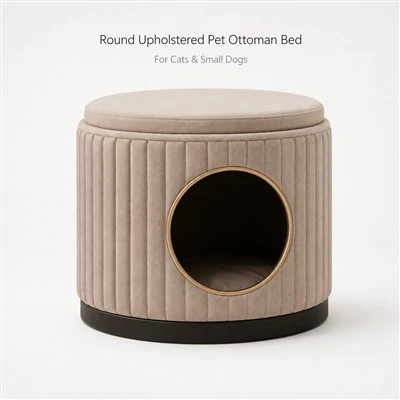
First off, let’s get one thing straight: pet furniture isn’t like your couch or coffee table. It’s built for creatures that have a completely different idea of what “well cared for” means. A human might wipe a spill off a table and call it good, but a dog might drag its muddy paws all over a bed, a cat might knead a scratching post until the fabric puffs off, and a rabbit might chew through the base of a small pet hideout. So yeah, maintenance isn’t just “nice to have” – it’s what keeps your furniture lasting longer, saves you from replacements (whether you’re a supplier dealing with customer complaints or a owner shelling out cash every few months), and keeps your pets happy too.
Let’s start with the stuff we actually see go wrong when people skip maintenance, because that’s where the proof is. Take our best-selling modular cat trees, for example. The scratching posts are wrapped in sisal rope, right? Cats go nuts for that – it’s way better than your carpet, trust me, we use extra-thick sisal because we’ve tested it against 100+ cat claw sharpening sessions. But if you don’t trim the loose rope fibers every couple of months, those loose ends become a choking hazard for kittens. I can’t tell you how many times we’ve gotten a panicked call from a customer whose 6-month-old kitty tried to eat a frayed rope strand and got it stuck in its mouth. That’s a problem no one wants to deal with, and a 5-minute trim every 8 weeks would’ve fixed it.
Then there are the memory foam dog beds, which are super popular for senior pups with joint pain. The cover is usually removable and machine-washable, but here’s the thing: if you just throw it in the wash once a season instead of monthly, you’re not just dealing with funky smells – that buildup of dirt, saliva, and fur breaks down the foam way faster. We did a test a couple years back where we tracked 50 identical beds for a year. The ones owners washed the cover every 4 weeks had foam that retained its shape 90% after 12 months. The ones that washed it every 6 months? Their foam was flat, lumpy, and had lost 60% of its support by the end of the year. That’s not just a comfort issue – it’s a durability issue, which means those beds don’t last as long, so customers have to buy new ones sooner, or they leave bad reviews.
Now, as a supplier, I get it – a lot of people think “pet furniture maintenance” means hauling a giant tree to the bathtub or paying for a professional cleaner. It’s not that complicated, and we don’t make our products so high-maintenance that it’s a chore. Let’s talk about the real, doable maintenance tasks that take 10 minutes max, because that’s what actually gets done.
First, weekly quick checks. For any piece of furniture with fabric or rope (cat trees, dog beds, small pet tunnels), run your hands over the surface. Look for loose threads, frayed rope, or tears in the fabric. For cat trees, wiggle the posts and the top perch a little – if the base feels wobbly, that means the screws are loose. Tightening them with a standard screwdriver takes 2 minutes, and it stops the whole thing from tipping over when a 15-pound cat launches itself onto the top. I’ve seen cat trees fall because owners never checked the screws, and that’s not just a broken piece of furniture – that’s a scared cat, and a very upset owner.
Then, the monthly deep clean, which is way easier than it sounds. Most of our pet beds have waterproof inner liners, right? So if your pet has an accident (or rolls in something gross), you just remove the outer cover and wipe the inner liner with a damp cloth and mild soap, then wipe it dry. The outer cover goes in the washing machine on cold, no bleach, and that’s it. For cat trees, if the perches are fabric-covered, toss the fabric parts in the wash if they’re removable, or use a lint roller and a handheld vacuum with a brush attachment to get the fur off. A lot of people think fur is just cosmetic, but if it builds up in the crevices of a cat tree, it can attract dust mites, which aren’t great for both pets and humans with allergies. We’ve had customers tell us their seasonal allergy flare-ups stopped once they started vacuuming their cat tree once a month – that’s a win-win.
Wait, what about outdoor pet furniture? We make a line of raised dog beds for pups that like to hang out on the patio or deck, and those have been a game-changer for people with big yards. Maintenance for those is super simple: since they’re elevated, air circulates under them so they don’t get moldy, but you still want to rinse them off with a garden hose once a month if they’re out in the rain, and scrub the fabric with a mild cleaner if there’s bird droppings or mud. We had one customer who left his dog’s outdoor bed out all winter, didn’t touch it, and came spring to find it was covered in mildew – he thought he’d have to throw it away, but a quick scrub with a vinegar solution fixed it, and it’s still going strong 3 years later. That’s way better than a $100 replacement bed.
Now, let’s address the big question: is it worth it? Because I know what a lot of you are thinking – “I don’t have time for extra chores, why not just buy cheap furniture and replace it every few months?” Let’s run the numbers. Let’s say a mid-range cat tree costs $150. If you do monthly maintenance, it’ll last 3-5 years. That’s $30-$50 a year. If you skip maintenance and it falls apart in a year? That’s $150 a year. For a dog bed, a good memory foam one is $80. Maintenance makes it last 2 years, so $40 a year. Skip it, and it’s flat in 6 months – that’s $160 a year. That’s not even counting the hassle of returns, or the risk of your pet getting hurt from a broken piece. Kittens have gotten their paws stuck in frayed cat tree posts, senior dogs have had more joint pain from lumpy beds – that’s not worth saving 10 minutes a week.
As a supplier, I also see that when customers take care of their pet furniture, they come back. We’ve got repeat clients who buy 5 new beds a year for their foster dogs, and they only buy from us because our products last when they’re being used by 10+ dogs a month. The ones who skip maintenance? They come back every few months complaining about a broken product, and honestly, it’s a lot more work for us to handle returns and replacements than it is for them to spend 10 minutes tightening screws.
Wait, I should also bust a myth here: some people think that “natural” pet furniture (like wooden dog beds or wool-covered cat trees) needs more maintenance. Nope. Our solid wood pet frames are treated with a non-toxic sealant, so you just wipe them down with a dry cloth once a month. If your dog gets mud on the frame, a damp cloth with a little dish soap is all you need. The wool covers are just as easy – lint roll once a week, wash monthly, same as fabric. The key is that we design our products to be low-maintenance, not high-maintenance, because no one wants a pet furniture piece that’s a second job.
I know a lot of you are probably reading this thinking “I already have a pet, I’m swamped, I don’t need more stuff to do.” But let’s be real – the time you spend doing maintenance is way less than the time you’ll spend soothing a scared pet, returning a broken product, or buying a new one every few months. And for the business folks out there – if you’re a retailer who sells pet furniture, educating your customers about basic maintenance can cut down on your return rate, build trust, and keep customers coming back. We include a little care card with every piece we ship that has 3 quick maintenance tips, and it’s made a huge difference in our customer satisfaction scores.
Let me give you one last example that stuck with me. A couple years back, a customer emailed us saying their senior Lab had been using our orthopedic dog bed for 4 years. She said she washes the cover every 4 weeks, tightens the bed’s base screws once a quarter, and vacuums the underside every month. She told us the bed was still in better shape than when she bought it, and her vet said the foam was still supporting her dog’s joints as well as it was the day she got it. That’s the kind of stuff that makes this job worth it – seeing that a little regular care can make a product last that long, and give a pet comfort for years.

At the end of the day, pet furniture is for your fur babies, right? They can’t tell you that their bed is lumpy or that their scratching post is a choking hazard, but taking 10 minutes a week to check on it, and 30 minutes a month to clean it, is the least we can do for the pets that bring us so much joy. If you’re in the market for durable, low-maintenance pet furniture that’s built to last, we’ve got a range of options for cats, dogs, small pets, and even outdoor use – and our team is happy to chat through care tips specific to your pet and their furniture. If you’re a business looking to stock quality pet products or bulk order for your customers, we’d love to connect to talk through your needs and find the right solutions for you.
Willow Woven Cat Bed References: 1. American Veterinary Medical Association. (2021). Common Hazards in Pet Furniture for Cats and Dogs. 2. Journal of Feline Medicine and Surgery. (2022). Durability of Modular Cat Furniture Under Household Use Conditions. 3. International Association of Animal Behavior Consultants. (2020). Best Practices for Maintaining Enrichment Furniture for Companion Animals.
Songtai(Shandong) International Trade Co., Ltd.
As one of the most professional pet furniture manufacturers in China, we have world-leading production equipment and strong manufacturing capabilities. Please rest assured to buy high quality pet furniture for sale here from our factory. Customized orders are welcome.
Address: 4th Floor, OCC Aode International, Linyi, Shandong, China.
E-mail: york@petduke.com
WebSite: https://www.pet-duke.com/
